by Bridger Tjornehoj
From beginners to experts.
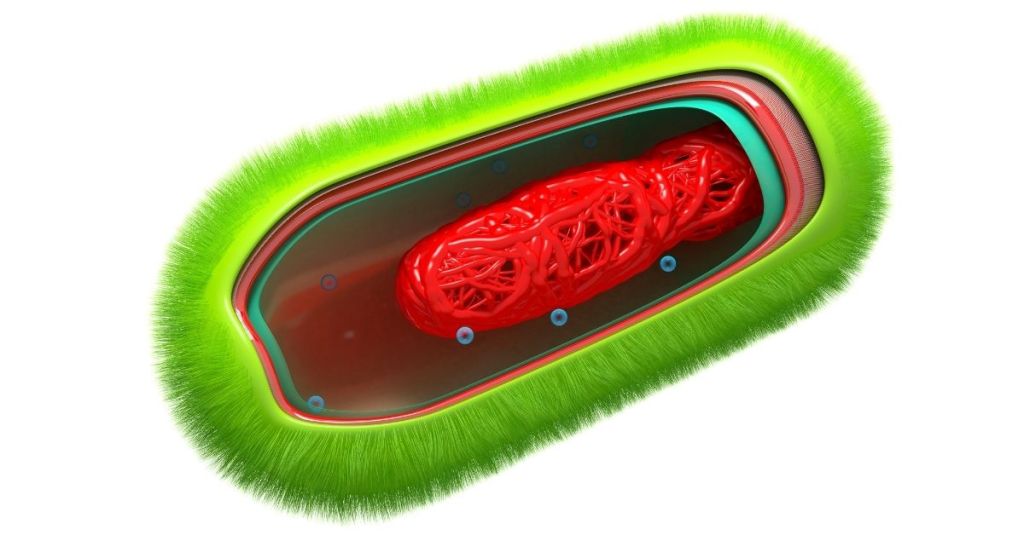
Did you know that every living thing on planet earth even bacteria is made up of these microscopic little living things called cells? Cells are separated in two different categories called Eukaryotic cells (eukaryotes) and Prokaryotic cells (prokaryotes). They are the building blocks of life and you will learn 100% true facts and paragraphs in this website.
eukaryotic cells
animal cells
Eukaryotic cells make up all plant, animal, protozoan and fungi cells. For animals and human cells there are three main organelles (parts) which are called cytoplasm, nucleus and cell membrane. The cytoplasm is the jelly like nutritional fluid in the cell that works with the mitochondria that turns nutrients into energy so all the other organelles can operate.The nucleus is the control center of the cell. It holds chromosomes and deoxyribonucleic acid also known as DNA which tells the rest of the cell what shape, size, length and width. Closer more inside the nucleus there is another ball like organelle called nucleolus. The nucleolus is the maker of ribosomes which synthesizes RNA and specific proteins. And finally the cell membrane, as winner of my personal favorite it is also known as the plasma membrane it holds all the other organelles inside and separates cell from other cell so cells don’t clump up together. Also it controls what proteins, fats and nutritions come inside the cell.
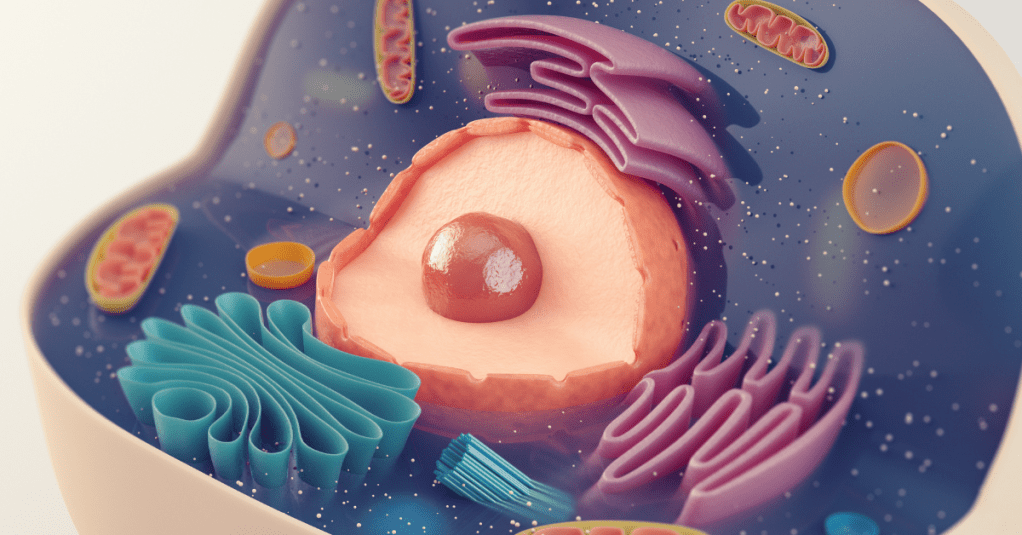
Mitochondria is the powerhouse of the cell, they turn nutrients from the cytoplasm into energy and “charges” all the other organelles.
Ribosomes are the protein factories of the cell, they are chunks of proteins that contain ribonucleic acid (RNA) and synthesizes the cell. They also float in almost every area of the cell.
Vacuoles are the supply bin of the cell, they contain water and nutrients that the cell needs to have to survive, also stores waste inside so the other organelles don’t get polluted with each others waste.
The endoplasmic reticulum is the mail office of the cell, it transports proteins, fats and other useful materials around the cell. there are two types of endoplasmic reticulum: smooth and rough. The rough ER is named after the rough look it has on its edges because of numerous ribosomes that occur along some of the outer parts of the ER. It connects to the nucleus that allows the messenger RNA that has instructions for how to make and package proteins and fats to get delivered to the ribosomes. Smooth ER don’t have ribosomes and are believed to transport and lipid production.
Golgi apparatus is named may things such as Golgi body, Golgi complex, or simply plain Golgi. It gets fats and proteins from the ER and slightly modifies them before transporting those materials to only a few other organelles such as secretions, cell membrane and lysosomes.
chromosomes are tiny molecules of DNA and are contained inside the nucleus from there parent so they can get the general form and shape of there parent. (Remember that zero living thing on earth has has the exact DNA as there parent.)
lysosomes are formed or made by the Golgi apparatus and have extremely strong enzymes that could destroy the entire cell! They need these enzymes to break down large clumps or large particles.
 Biology Rules!
Leave a comment